


Why Are There So Many Pride Flags?!
Flags, in their simplest form, are tangible symbols of intangible ideas - nations fandoms, sexualities, and even fictional places. All of these things exist only within the human experience, and somehow simple colored pieces of cloth are the way we outwardly express these complex ideas.
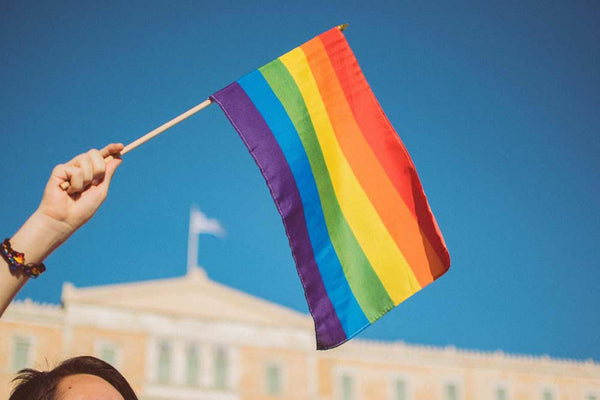 When the 8-stripe rainbow flag debuted in 1978, it was the perfect symbol to unify those fighting for gay and trans rights. Since then the Gilbert Baker's rainbow flag (simplified to 6 stripes) has been a prolific symbol of hope and community that those that identify as LGBT+ can congregate under. With the power that a flag can have for a liberation movement, it was inevitable that more niche flags would follow.
Click here to learn more about the history and variations of the Rainbow Flag
The Bisexual flag was created 20 years later in 1998, and the Transgender (Trans) flag in 1999- each to celebrate and highlight the experiences and hardships of those unique identities.

That idea started to snowball in the 2010s as more and more young people were finding their own queer communities online and there became an effort to expand on ideas of gender and sexuality. This became a movement known as MOGAI (Marginalized Orientations, Gender Alignments, and Intersex) and meant to create a more inclusive community than LGBTQIA+.
Even though it was short-lived, the MOGAI movement made a lasting impact on the queer community. Without it, we may not have many of the popular pride flags we see today like the Lesbian, Nonbinary, and Asexual flags.

People adopt labels when they recognize their lived experiences in others and come together to share in what they have in common, and fly flags to showcase to the world around them, a little piece of who they are. As a community where so many of us spend so much time hiding our true selves or being discriminated against for it, it makes perfect sense that a flag would be the most widely loved tool for LGBTQ+ people to showcase their identity.
Frequently Asked Questions About Pride Flags
Why does every LGBTQ+ identity have its own flag?
Flags give communities a visible symbol to rally around. For LGBTQ+ people, having a flag specific to your identity means your experience is recognized within a broader community where it can sometimes get lost. The rainbow flag represents everyone, but it doesn't speak to what makes being bisexual, nonbinary, or asexual distinct. Identity-specific flags fill that gap.
Who decides what a pride flag looks like?
Anyone can design one! Most pride flags were created by community members, not official organizations. Some gained traction quickly because they spread on social media. Others took years to catch on and gain validity. There's no governing body that approves or standardizes pride flag designs, which is why you sometimes see competing versions of the same flag or identity.
What was the first pride flag?
Gilbert Baker designed the original rainbow pride flag in 1978 for the San Francisco Gay Freedom Day Parade. It had eight stripes, each with a color meaning assigned by Baker. The six-stripe version used today came later, after manufacturing constraints on pink and teal led to simplifications.
When did other identity flags start appearing?
The bisexual flag came in 1998. The transgender flag followed in 1999. Through the 2010s, the MOGAI movement (an umbrella term for marginalized orientations, genders, and intersex identities) accelerated the creation of flags for lesbian, nonbinary, asexual, and many other communities. Social media made it easier for these designs to spread and gain recognition.
Is there an official list of recognized pride flags?
No official list exists. Recognition is community-driven. Some flags are nearly universally known, like the rainbow flag and the transgender flag. Others are recognized within specific communities but not widely outside them. Our Comprehensive Guide to Pride Flags covers the most widely used ones.
Where can I buy pride flags?
Flags For Good carries the full range of LGBTQ+ pride flags, including flags for transgender, bisexual, nonbinary, asexual, pansexual, and lesbian communities, among others. Every purchase donates $1 to an organization of your choice.
Share:
0 comments

Author
Michael Green is a credentialed vexillologist and the founder of Flags For Good, an Indianapolis-based flag company dedicated to causes worth flying. He served as Technical Editor of The Complete Guide to Flags of the World, 4th Edition and has delivered multiple TEDx talks on flag design and symbolism. With flags encountered across 75+ countries, Michael brings both academic expertise and real-world perspective to everything he writes about flags.
Read more from Flags For Good
-

The Transgender Pride Flag: Colors, Meaning, and History
Monica Helms designed the transgender pride flag in August 1999, starting with a conversation, a suggestion to keep it simple, and a sketch drawn from bed two weeks later. Here's the full story behind the five stripes, what each color means, and the one design detail that makes it impossible to fly wrong.
-
What is Vexillology? A Flag Expert Explains
What is vexillology? Michael Green, credentialed vexillologist and Technical Editor of The Complete Guide to Flags of the World, explains the study of flags, the five NAVA design principles, and why flags matter.
-

Colorado's Annoyingly Inconsistent Flag
Look at ten different Colorado flags and you'll find three different versions. On some, the tips of the C sit inside the white stripe. On others, they poke outside it. And on others, they land right on the line, matching it perfectly. All three versions exist in the wild and all three get printed and sold. So which is correct?

